

Local SEO and organic SEO both help businesses appear in Google, but they target different searches. Local SEO focuses on customers searching within a specific area, while organic SEO focuses on improving website visibility in standard search results.
For many businesses, the right choice depends on where customers are located, what they search for, and whether location affects the buying decision.
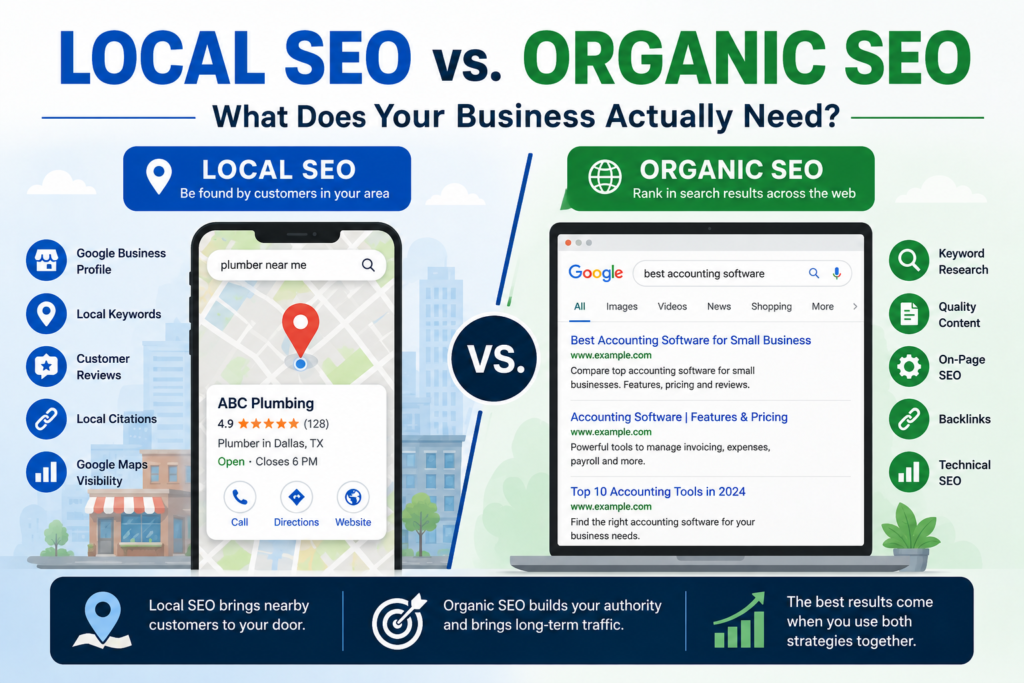
What Is the Difference Between Local SEO and Organic SEO?
The main difference between local SEO vs. organic SEO is search intent.
Local SEO targets searches where location matters, such as:
- plumber near me
- dentist in Chicago
- roofing company in Toronto
- family solicitor in Manchester
Organic SEO targets a wider range of searches that may not depend on the searcher’s location, such as:
- how much does roof replacement cost?
- best accounting software for small businesses
- how to choose a personal injury lawyer
- inventory management software
A business can appear in both local and organic search results.
What Is Local SEO?
Local SEO focuses on improving a business’s visibility when people search for products or services within a particular area.
It is most relevant to businesses with physical locations and companies that travel to customers within defined service areas.
Which Businesses Benefit From Local SEO?
Local SEO commonly applies to:
- Lawyers
- Dentists
- Medical practices
- Plumbers
- Electricians
- HVAC companies
- Roofing contractors
- Restaurants
- Auto repair shops
- Cleaning companies
- Real estate agencies
For example, a plumber serving Dallas needs visibility among people searching for plumbing services in and around Dallas. Traffic from people outside the company’s service area may have little commercial value.
What Does Local SEO Include?
Local SEO work can include:
- Google Business Profile optimization
- Local keyword research
- Service page optimization
- Location pages
- Local citations
- Customer reviews
- Business information consistency
- Local link building
- On-page SEO
- Local competitor research
The website and Google Business Profile should give Google consistent information about what the business does and where it operates.
What Is Organic SEO?
Organic SEO focuses on improving a website’s position in Google’s standard unpaid search results.
The target audience may be local, national, or international depending on the business.
What Does Organic SEO Include?
Organic SEO commonly involves:
- Keyword research
- On-page SEO
- Website structure
- Technical SEO
- Content creation
- Internal linking
- Link building
- Search intent optimization
For example, a software company selling throughout the United States may target “inventory management software” rather than concentrating on searches within one city.
Local SEO vs. Organic SEO: How Do They Compare?
Both approaches use many of the same SEO principles, but their priorities are different.
| SEO Factor | Local SEO | Organic SEO |
|---|---|---|
| Primary Goal | Reach customers in specific locations | Increase broader search visibility |
| Target Searches | Location-based and “near me” searches | Informational, commercial and transactional searches |
| Google Maps | Major focus | Usually not a primary focus |
| Google Business Profile | Important | Usually less relevant |
| Website SEO | Important | Important |
| Location Pages | Often useful | Needed only when relevant |
| Local Citations | Common | Usually lower priority |
| Reviews | Important for local presence | Usually less central |
| Content Strategy | Services, locations and local topics | Broader commercial and informational topics |
| Best Fit | Local and service-area businesses | National, online and broader-market businesses |
The better option is the one that matches how customers actually find and buy from the business.
Does a Local Business Need Organic SEO?
Yes. A local business can benefit from organic SEO even when most customers come from a defined service area.
Consider a personal injury law firm.
A potential client might search:
“personal injury lawyer near me”
That search has strong local intent.
Another potential client might search:
“what should I do after a car accident?”
That search is informational and may produce standard organic results.
Local SEO can help the firm compete when someone is actively looking for a nearby lawyer, while organic content can reach people earlier in their research.
How Can Local and Organic SEO Support Each Other?
A local business might use:
- Service pages for commercial searches
- Location pages for geographic searches
- Google Business Profile for Maps visibility
- Blog posts for informational searches
- Internal links to connect articles with relevant services
- Backlinks to support website authority
The two approaches can work together rather than compete with each other.
Which Businesses Should Prioritize Local SEO?
A business should usually place more emphasis on local SEO when customers need a provider within a particular area.
Local SEO Is Usually a Better Fit For:
- Home service companies
- Law firms
- Dental offices
- Medical practices
- Restaurants
- Local retailers
- Auto repair businesses
- Contractors
- Salons
- Real estate companies
A roofing contractor serving Houston, for example, has little reason to rank for homeowners in New York. Visibility within the contractor’s actual service area has more value.
Which Businesses Should Prioritize Organic SEO?
Organic SEO usually deserves more attention when a business can serve customers across a wider geographic market.
Organic SEO Is Often a Better Fit For:
- SaaS companies
- E-commerce stores
- Manufacturers
- Online service providers
- Publishers
- National companies
- B2B companies
A manufacturer supplying products throughout the U.S., Canada, and UK may benefit more from product, service, and industry rankings than from focusing heavily on Google Maps.
Can You Use Local SEO and Organic SEO Together?
Yes. Many businesses should use both.
Consider an HVAC company serving several cities.
Local SEO Could Target:
- HVAC contractor near me
- AC repair Dallas
- furnace repair Fort Worth
Organic SEO Could Target:
- why is my AC blowing warm air?
- how often should an HVAC system be serviced?
- when should a furnace be replaced?
The first group reaches people looking for a provider. The second reaches people researching a problem.
Useful informational content can then link naturally to relevant service pages, giving interested visitors a clear next step.
Should You Invest in Local SEO or Organic SEO First?
Start with the searches most closely tied to customers and revenue.
Choose Local SEO First When:
- Customers come from specific cities or service areas.
- People commonly search for nearby providers.
- Google Maps is important in the industry.
- The business has a physical location or defined service area.
- Local competitors already have strong Maps visibility.
Choose Organic SEO First When:
- Customers can come from many locations.
- The business sells nationally or internationally.
- Product or service searches are not strongly location-dependent.
- Informational content plays a large role in customer acquisition.
- Google Maps has little effect on sales.
Use Both When:
The business depends on local customers but also has opportunities to reach potential customers through service pages, guides, articles, and other organic search results.
What SEO Strategy Does Your Business Need?
Three questions can help determine where to start.
1. Where Are Your Customers?
If most customers come from one city or region, local SEO deserves more attention.
If customers can come from anywhere, broader organic SEO may provide more opportunities.
2. Does Location Affect the Buying Decision?
Someone looking for emergency plumbing usually needs a nearby company.
Someone purchasing business software generally does not.
The more location matters to the customer, the more important local SEO becomes.
3. What Does the Customer Search Before Buying?
Do not focus only on your main service keyword.
Customers may search for problems, costs, comparisons, reviews, locations, and specific services before contacting a company.
Understanding those searches helps determine where local and organic SEO should fit into the strategy.
What Are Common Local and Organic SEO Mistakes?
Focusing Only on Website Traffic
More traffic does not automatically mean more customers.
A local contractor can receive thousands of visitors from broad informational searches without generating qualified leads within its service area.
Relying Only on Google Business Profile
A Google Business Profile is important for local businesses, but it should not replace the website.
Service pages, location information, internal links, reviews, citations, and backlinks can all contribute to search visibility.
Creating Too Many Location Pages
Creating a page for every nearby town does not automatically improve local rankings.
Each location page should have a real purpose and provide useful information for customers in that area.
Targeting Keywords Without Considering Intent
A keyword may have search volume without being valuable to the business.
The better question is whether the person making that search could realistically become a customer.
How Can Rank Your Site Help With Local SEO?
Rank Your Site provides Local SEO services for businesses that want to improve their presence in Google Search and Google Maps.
The work may include Google Business Profile optimization, local keyword research, service and location page optimization, citation management, competitor research, website SEO, and local link opportunities.
The approach should depend on the business, its service area, competition, and how customers search rather than using the same SEO plan for every company.
Frequently Asked Questions About Local SEO vs. Organic SEO
Is Local SEO Better Than Organic SEO?
Neither is better for every business. Local SEO is generally more useful when customers need a nearby provider, while organic SEO can reach customers across larger markets.
Does Local SEO Help With Google Maps?
Local SEO includes work related to Google Business Profile, reviews, local business information, website optimization, and other areas that can support Google Maps visibility.
Can Local Businesses Benefit From Organic SEO?
Yes. Local businesses can use organic SEO to rank service pages and informational content in addition to competing in local results.
Do Service-Area Businesses Need Local SEO?
Yes. Plumbers, electricians, roofers, cleaners, landscapers, and other businesses that travel to customers can use local SEO to target the areas they serve.
Can a Business Use Both Local and Organic SEO?
Yes. A business can use local SEO for location-based searches and organic SEO for service, commercial, and informational searches.
Local SEO or Organic SEO: Which Should You Choose?
The choice between local SEO vs. organic SEO depends on where customers are and how they search.
If people need a nearby provider, local SEO should receive more attention. If customers can buy from or work with the business regardless of location, organic SEO may be the bigger priority.
Many businesses need both. Local SEO can target customers who are ready to find a nearby provider, while organic SEO can reach people searching for services, answers, comparisons, and solutions.
